


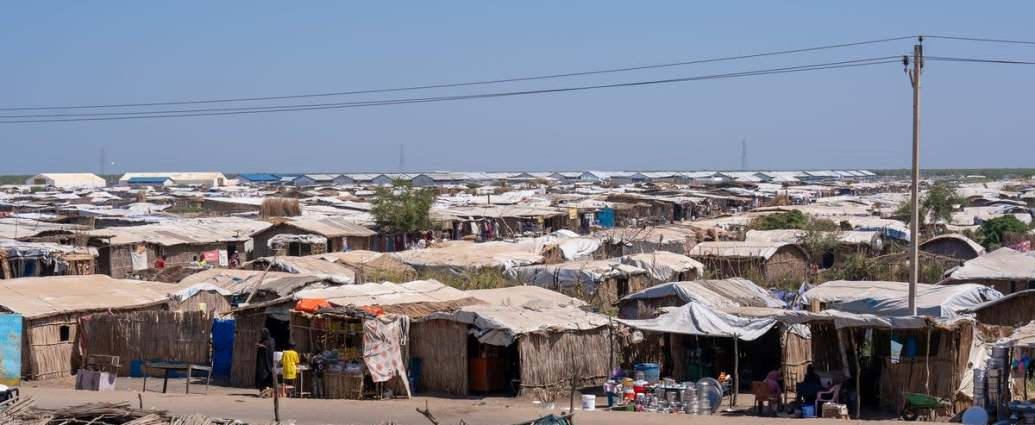
(RENK COUNTY, UPPER NILE STATE) – South Sudan is facing growing economic and humanitarian pressure following sharp reductions in international aid, including a major cut in funding from the United Kingdom, at a time when the country is hosting more than one million people fleeing the conflict in neighbouring Sudan.
The UK has been accused by humanitarian organisations of failing to meet earlier commitments to support civilians affected by the Sudan war. While London identified Sudan as a priority crisis when it reduced its foreign aid budget from 0.5 percent to 0.3 percent of gross national income, funding reaching South Sudan has since declined sharply despite the spillover of the conflict across the border.
According to data tracked by the United Nations Office for the Coordination of Humanitarian Affairs, UK aid to South Sudan fell by more than 40 percent, from about 131 million United States dollars in 2024 to around 75 million United States dollars in 2025. At current market rates, this is equivalent to a decline from roughly 930 billion South Sudanese pounds to about 533 billion South Sudanese pounds.
Other major donors have also reduced support. United States funding dropped from about 708 million United States dollars, or nearly 5 trillion South Sudanese pounds, to around 283 million United States dollars, equivalent to about 2 trillion South Sudanese pounds. German aid fell from roughly 102 million United States dollars, about 724 billion South Sudanese pounds, to around 63 million United States dollars, or about 447 billion South Sudanese pounds.
Humanitarian agencies say the timing of the cuts has left South Sudan ill prepared to absorb the impact. The country has received an estimated 1.3 million refugees and returnees since fighting escalated in Sudan, yet overall aid levels in 2025 were reported to be the lowest since South Sudan gained independence in 2011.
Aid organisations operating in the country warn that reduced funding is forcing them to scale back essential services. Oxfam South Sudan said it supported about 770,000 people this year but expects to reach less than half that number next year as budgets shrink. Assistance covers food distribution, clean water, sanitation and basic health services, all of which directly support local markets and livelihoods.
Officials and aid workers in Renk County, a key entry point for refugees from Sudan, say facilities are severely overstretched. Around 44,000 refugees and returnees were in Renk at the start of December, including more than 11,000 people housed at the main transit centre, far above its intended capacity. Access to clean water, health care and shelter remains limited.
| Indicator | Current situation |
|---|---|
| Refugees and returnees in Renk | About 44,000 |
| People in transit centre | Over 11,000 |
| Clean water access | One tap per 433 people |
Reduced funding has also affected staffing and services. Cleaning and maintenance teams have been cut, while several health focused organisations have closed operations entirely. The impact is visible in the spread of preventable diseases. More than 1,500 cholera cases have been reported since late 2024, alongside over 1,100 cases of hepatitis E, conditions linked to poor water and sanitation.
Climatic pressures are adding to costs. Floods displaced about 300,000 people across South Sudan this year, while extreme heat threatens water supplies in areas like Renk. Aid agencies warn that if local reservoirs dry up earlier than expected, large scale water trucking will be required, significantly increasing operational expenses.
The funding shortfall comes as South Sudan’s own economic conditions remain fragile. More than 80 percent of the population lives in poverty, and about six million people are estimated to be facing extreme hunger. Renewed local conflict has displaced hundreds of thousands more within the country, increasing demand for already stretched services.
In response, the UK government said it remains committed to supporting civilians affected by the Sudan conflict and noted that it has provided more than 146 million pounds in aid to Sudan this year. It said assistance has helped deliver food, water, medical care and support for vulnerable groups. Humanitarian agencies, however, continue to argue that a regional approach is needed, recognising that South Sudan and other neighbouring countries are carrying much of the burden created by the Sudan war.
For South Sudan, the reduction in aid is not only a humanitarian issue but also an economic one. Aid spending supports jobs, local suppliers and basic market activity in many regions. Continued cuts risk weakening essential services, increasing instability and raising the long term cost of recovery for both South Sudan and the wider region.


